
Diabetic Foot Care in Dubai: What Every Person with Diabetes Should Know

If you live with diabetes, your feet need more attention than most people realise. Small problems like a blister, a cracked heel or an ingrown nail can turn serious quickly when blood sugar affects nerves and circulation. The good news is that most complications are preventable with the right daily habits and regular diabetic foot care.

Here is what diabetic foot care in Dubai looks like in practice, and when it is time to see a podiatrist.

Why Diabetes Affects Your Feet

Over time, high blood sugar can damage the nerves and blood vessels in the feet. This leads to two main risks:

  • Reduced sensation (neuropathy): you may not feel a cut, a stone in your shoe or a burn from hot ground.
  • Poor circulation: wounds heal more slowly and infections can spread more easily.
  • Skin and nail changes: dry, cracked skin and thickened nails create openings for bacteria and fungus.

Diabetic Foot Care 1
Put together, this means a minor injury can go unnoticed and develop into an ulcer or infection.

Why It Matters More in the UAE

Life in Dubai adds its own challenges for diabetic feet:

  • Hot pavements, sand and pool decks can burn feet that have lost sensation.
  • Walking barefoot at home on tiled or marble floors increases the risk of unnoticed injuries.
  • Heat and closed shoes trap sweat, which encourages fungal infections between the toes.
  • Frequent washing, including for ablution, leaves moisture between the toes if feet are not dried well.

Your Daily Diabetic Foot Care Routine

A few minutes a day makes the biggest difference:

  • Check your feet every day, including the soles and between the toes. Use a mirror or ask a family member to help.
  • Wash with lukewarm water and dry carefully, especially between the toes.
  • Moisturise the heels and tops of the feet, but not between the toes.
  • Never walk barefoot, indoors or outdoors.
  • Wear well fitted, supportive shoes and check inside them before putting them on.
  • Trim nails straight across and avoid cutting corners.
  • Never use blades, corn plasters or sharp tools on calluses or corns at home.

Diabetic Foot Care 2

Warning Signs You Should Not Ignore

See a professional promptly if you notice any of the following:

  • A cut, blister or sore that is not healing
  • Redness, swelling, warmth or discharge
  • Changes in skin colour or temperature
  • Numbness, tingling or burning pain
  • Ingrown nails or thick, discoloured nails

Any open wound on a diabetic foot should be treated as urgent. If there are signs of spreading infection, fever or blackened skin, seek medical care the same day.

How Professional Care Helps

Regular podiatry care is one of the most effective ways to prevent complications. Most guidelines recommend a full foot assessment at least once a year, and more often if you have reduced sensation, poor circulation or a history of ulcers.

At Feetlab, our team provides safe, blade free care designed with diabetic feet in mind:

  • Medical pedicure: gentle removal of hard skin and careful nail care in a hygienic, clinical setting.
  • Chiropody care: safe treatment of corns, calluses, thickened nails and ingrown nails.
  • Custom insoles: pressure relief to protect high risk areas of the foot.

Diabetic Foot Care 3
Every visit includes a check of your skin and nails, so early changes are spotted before they become bigger problems. For more complex concerns, our podiatry team can assess and treat further.

For more information, you can also check our Instagram pages. We’ve shared similar cases you might be interested in checking.

Take Care of Your Feet Today

Diabetic foot care is not about one appointment. It is about steady habits and regular checks that keep you walking comfortably for years.

Book your diabetic foot care appointment at Feetlab, Dubai Hills Mall or Dubai Creek Harbour.

Diabetic Foot Care in Dubai: What Every Person with Diabetes Should Know

If you live with diabetes, your feet need more attention than most people realise. Small problems like a blister, a cracked heel or an ingrown nail can turn serious quickly when blood sugar affects nerves and circulation. The good news is that most complications are preventable with the right daily habits and regular diabetic foot care.

Here is what diabetic foot care in Dubai looks like in practice, and when it is time to see a podiatrist.

Why Diabetes Affects Your Feet

Over time, high blood sugar can damage the nerves and blood vessels in the feet. This leads to two main risks:

  • Reduced sensation (neuropathy): you may not feel a cut, a stone in your shoe or a burn from hot ground.
  • Poor circulation: wounds heal more slowly and infections can spread more easily.
  • Skin and nail changes: dry, cracked skin and thickened nails create openings for bacteria and fungus.

Diabetic Foot Care 1
Put together, this means a minor injury can go unnoticed and develop into an ulcer or infection.

Why It Matters More in the UAE

Life in Dubai adds its own challenges for diabetic feet:

  • Hot pavements, sand and pool decks can burn feet that have lost sensation.
  • Walking barefoot at home on tiled or marble floors increases the risk of unnoticed injuries.
  • Heat and closed shoes trap sweat, which encourages fungal infections between the toes.
  • Frequent washing, including for ablution, leaves moisture between the toes if feet are not dried well.

Your Daily Diabetic Foot Care Routine

A few minutes a day makes the biggest difference:

  • Check your feet every day, including the soles and between the toes. Use a mirror or ask a family member to help.
  • Wash with lukewarm water and dry carefully, especially between the toes.
  • Moisturise the heels and tops of the feet, but not between the toes.
  • Never walk barefoot, indoors or outdoors.
  • Wear well fitted, supportive shoes and check inside them before putting them on.
  • Trim nails straight across and avoid cutting corners.
  • Never use blades, corn plasters or sharp tools on calluses or corns at home.
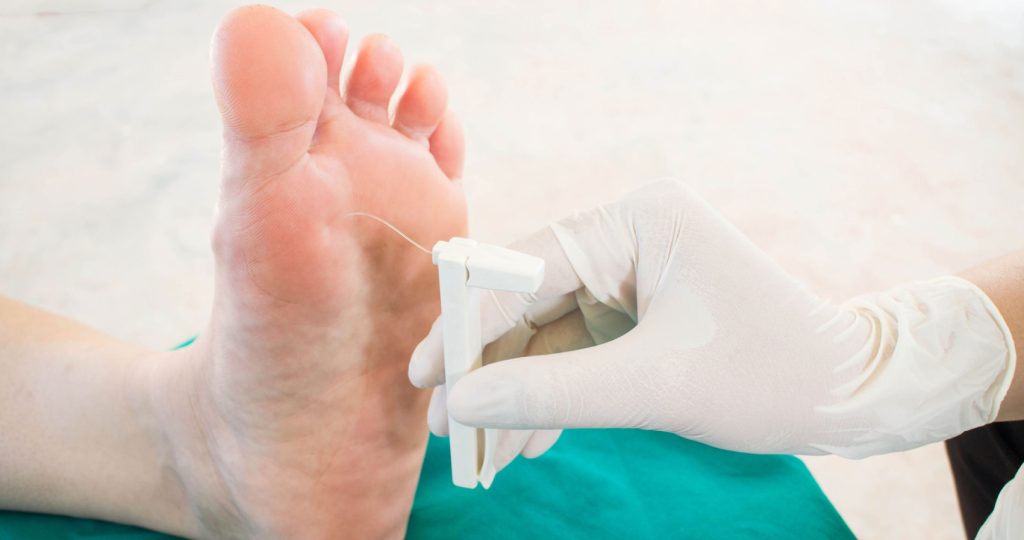
Diabetic Foot Care 2

Warning Signs You Should Not Ignore

See a professional promptly if you notice any of the following:

  • A cut, blister or sore that is not healing
  • Redness, swelling, warmth or discharge
  • Changes in skin colour or temperature
  • Numbness, tingling or burning pain
  • Ingrown nails or thick, discoloured nails

Any open wound on a diabetic foot should be treated as urgent. If there are signs of spreading infection, fever or blackened skin, seek medical care the same day.

How Professional Care Helps

Regular podiatry care is one of the most effective ways to prevent complications. Most guidelines recommend a full foot assessment at least once a year, and more often if you have reduced sensation, poor circulation or a history of ulcers.

At Feetlab, our team provides safe, blade free care designed with diabetic feet in mind:

  • Medical pedicure: gentle removal of hard skin and careful nail care in a hygienic, clinical setting.
  • Chiropody care: safe treatment of corns, calluses, thickened nails and ingrown nails.
  • Custom insoles: pressure relief to protect high risk areas of the foot.

Diabetic Foot Care 3
Every visit includes a check of your skin and nails, so early changes are spotted before they become bigger problems. For more complex concerns, our podiatry team can assess and treat further.

For more information, you can also check our Instagram pages. We’ve shared similar cases you might be interested in checking.

Take Care of Your Feet Today

Diabetic foot care is not about one appointment. It is about steady habits and regular checks that keep you walking comfortably for years.

Book your diabetic foot care appointment at Feetlab, Dubai Hills Mall or Dubai Creek Harbour.