
How to Choose the Right Footwear for Your Feet

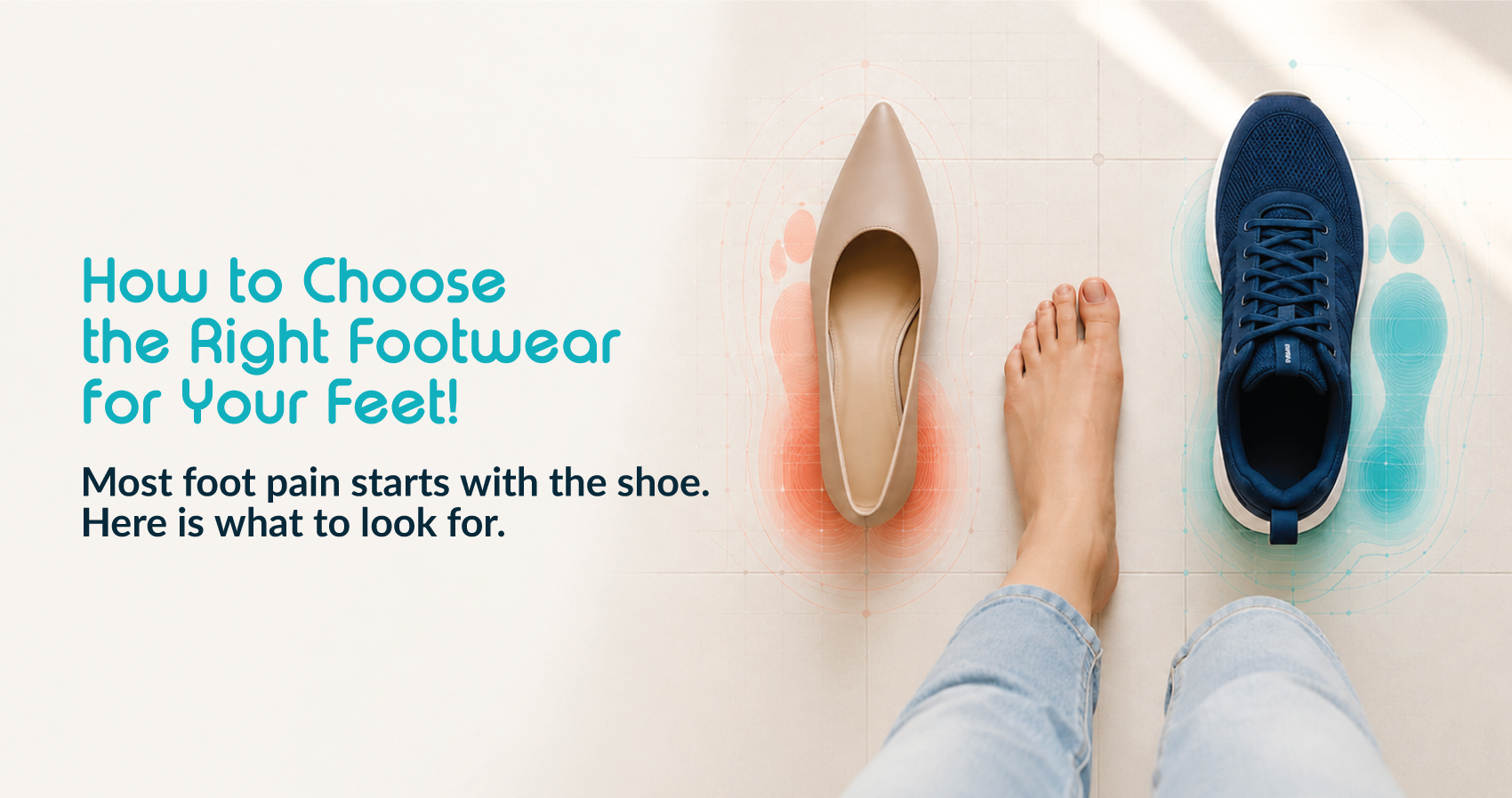
Why choose the right footwear for your feet? Most foot problems do not start in the foot. They start in the shoe. The wrong footwear worn consistently over time changes the way you walk, loads the wrong structures, and creates conditions that eventually show up as pain.

Here is what to look for when choosing shoes, what to avoid, and when footwear alone is not enough.

What Bad Footwear Actually Does

The damage from poor footwear is gradual, which is why most people do not connect the shoe to the problem when it finally appears.

The Right Footwear 1

  • Shoes that are too narrow compress the toes and contribute to bunions, corns, and nail problems over time
  • Flat shoes with no arch support put the entire load on the plantar fascia, increasing the risk of heel pain
  • High heels shift body weight forward onto the ball of the foot, causing pressure buildup and altering gait
  • Shoes that are worn down or past their useful life provide no support at all, even if they look fine

The cumulative effect of years in the wrong shoes is one of the most common reasons adults develop chronic foot pain in their 30s and 40s. And that’s exactly why you need to choose the right footwear and we’re here to help.

The Right Footwear – What to Look for in a Good Shoe

You do not need to sacrifice style for foot health. You do need to know what you are looking for.

  • Width at the toe box should allow the toes to sit naturally without compression
  • The heel counter should be firm and hold the heel securely without gripping
  • There should be some flexibility at the ball of the foot but stability through the arch
  • The sole should have some cushioning, especially if you spend time on hard surfaces
  • The shoe should feel comfortable from the first wear, not require a breaking-in period

If a shoe needs breaking in, it does not fit properly. Your foot should not have to adapt to the shoe.

The UAE Factor

The way people use footwear in the UAE adds specific stresses that are worth understanding.

The Right Footwear 2

  • Most indoor environments have hard tile or marble flooring, which offers no natural shock absorption
  • Frequent transitions between sandals outdoors and enclosed shoes indoors create inconsistent support
  • The heat makes feet swell slightly throughout the day, meaning shoes that fit in the morning may feel tight by evening
  • Long working hours on hard surfaces accelerate wear on both the shoe and the foot

Buying shoes in the afternoon when feet are at their largest, and choosing footwear suited to the surfaces you spend most time on, makes a significant practical difference.

When Footwear Alone Is Not Enough

Even the right footwear cannot correct an underlying structural issue. If you have flat feet, high arches, or a gait pattern that loads the foot unevenly, the right shoe will help but will not fully resolve the problem.

  • Custom insoles address the specific shape and pressure profile of your foot, which no off-the-shelf product can replicate
  • At Feetlab, we use 3D scanning to design insoles that fit precisely into your existing footwear
  • This is particularly effective for people with recurring heel pain, arch pain, or knee and lower back discomfort linked to how they walk

A podiatry assessment can identify whether your footwear is contributing to a current problem, and what level of intervention is actually needed.

For more information about the right footwear to choose or any foot wellness solutions we offer, please check our Instagram page.

Choosing the Right Footwear – Where to Start

If you are experiencing regular foot discomfort and you are not sure whether it is the shoe or something deeper, a single assessment will give you clarity. We look at your foot structure, your gait, and your footwear and tell you exactly what is going on. We help you choose the right footwear.

Book at Dubai Hills Mall or Dubai Creek Harbour.

How to Choose the Right Footwear for Your Feet
Why choose the right footwear for your feet? Most foot problems do not start in the foot. They start in the shoe. The wrong footwear worn consistently over time changes the way you walk, loads the wrong structures, and creates conditions that eventually show up as pain.

Here is what to look for when choosing shoes, what to avoid, and when footwear alone is not enough.

What Bad Footwear Actually Does

The damage from poor footwear is gradual, which is why most people do not connect the shoe to the problem when it finally appears.
The Right Footwear 1

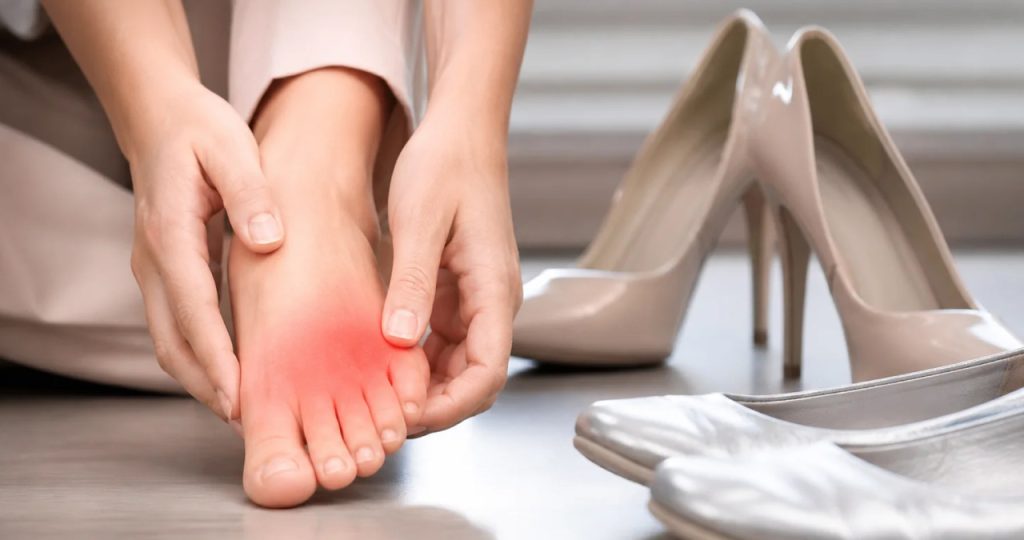
  • Shoes that are too narrow compress the toes and contribute to bunions, corns, and nail problems over time
  • Flat shoes with no arch support put the entire load on the plantar fascia, increasing the risk of heel pain
  • High heels shift body weight forward onto the ball of the foot, causing pressure buildup and altering gait
  • Shoes that are worn down or past their useful life provide no support at all, even if they look fine

The cumulative effect of years in the wrong shoes is one of the most common reasons adults develop chronic foot pain in their 30s and 40s. And that’s exactly why you need to choose the right footwear and we’re here to help.

The Right Footwear – What to Look for in a Good Shoe

You do not need to sacrifice style for foot health. You do need to know what you are looking for.

  • Width at the toe box should allow the toes to sit naturally without compression
  • The heel counter should be firm and hold the heel securely without gripping
  • There should be some flexibility at the ball of the foot but stability through the arch
  • The sole should have some cushioning, especially if you spend time on hard surfaces
  • The shoe should feel comfortable from the first wear, not require a breaking-in period

If a shoe needs breaking in, it does not fit properly. Your foot should not have to adapt to the shoe.

The UAE Factor

The way people use footwear in the UAE adds specific stresses that are worth understanding.
The Right Footwear 2

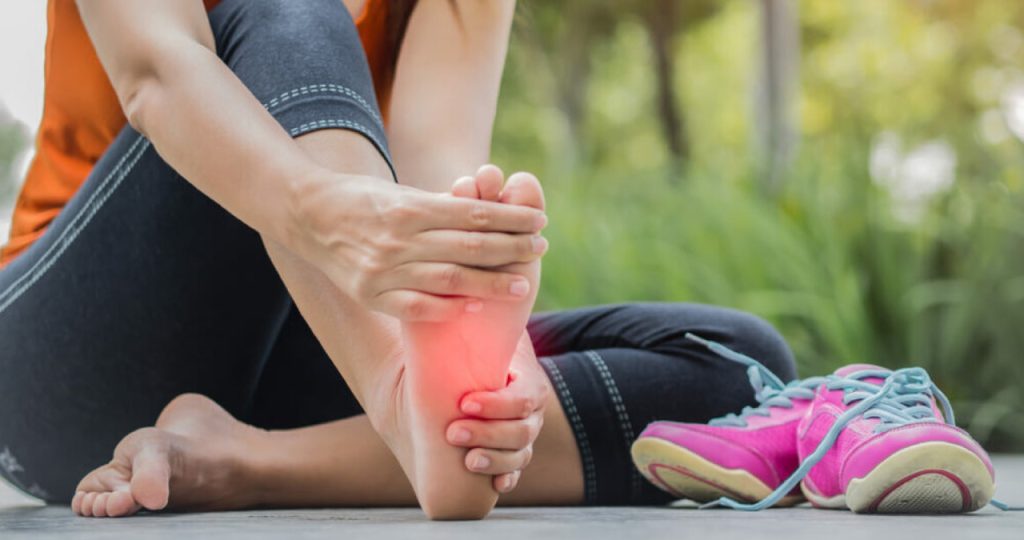
  • Most indoor environments have hard tile or marble flooring, which offers no natural shock absorption
  • Frequent transitions between sandals outdoors and enclosed shoes indoors create inconsistent support
  • The heat makes feet swell slightly throughout the day, meaning shoes that fit in the morning may feel tight by evening
  • Long working hours on hard surfaces accelerate wear on both the shoe and the foot

Buying shoes in the afternoon when feet are at their largest, and choosing footwear suited to the surfaces you spend most time on, makes a significant practical difference.

When Footwear Alone Is Not Enough

Even the right footwear cannot correct an underlying structural issue. If you have flat feet, high arches, or a gait pattern that loads the foot unevenly, the right shoe will help but will not fully resolve the problem.

  • Custom insoles address the specific shape and pressure profile of your foot, which no off-the-shelf product can replicate
  • At Feetlab, we use 3D scanning to design insoles that fit precisely into your existing footwear
  • This is particularly effective for people with recurring heel pain, arch pain, or knee and lower back discomfort linked to how they walk

A podiatry assessment can identify whether your footwear is contributing to a current problem, and what level of intervention is actually needed.

For more information about the right footwear to choose or any foot wellness solutions we offer, please check our Instagram page.

Choosing the Right Footwear – Where to Start

If you are experiencing regular foot discomfort and you are not sure whether it is the shoe or something deeper, a single assessment will give you clarity. We look at your foot structure, your gait, and your footwear and tell you exactly what is going on. We help you choose the right footwear.

Book at Dubai Hills Mall or Dubai Creek Harbour.